
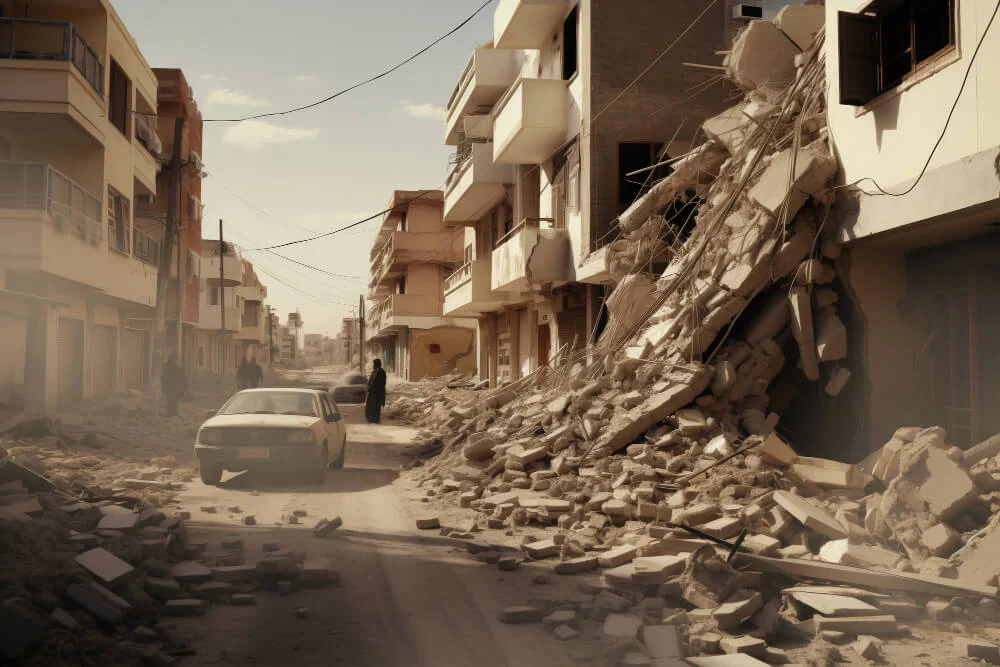
What Causes Earthquakes: Simple Explanation
Earthquakes are one of the most powerful natural events on our planet. They can shake the ground, damage buildings, and even change the shape of the land. But what actually causes earthquakes? Let’s break it down in simple words so anyone can understand.
What is an Earthquake?
An earthquake is the sudden shaking of the ground caused by movements inside the Earth. These movements release energy that travels as waves through the ground, making everything shake.
Think of it like stretching a rubber band until it snaps. When it finally breaks, all the stored energy is released at once. Earthquakes happen in a similar way.
The Earth’s Structure and Tectonic Plates
To understand earthquakes, we need to know a little about how Earth is built. Our planet has several layers:
- Crust – The thin outer layer where we live.
- Mantle – A hot, semi-solid layer under the crust.
- Core – The inner part of Earth, made of very hot metals.
The Earth’s crust is not one solid piece. Instead, it’s broken into large slabs called tectonic plates. These plates float slowly on the mantle, like puzzle pieces moving around.
Main Causes of Earthquakes
1. Movement of Tectonic Plates
Most earthquakes happen when tectonic plates move against each other. They might:
- Collide (convergent boundary)
- Pull apart (divergent boundary)
- Slide past each other (transform boundary)
As the plates push or rub, stress builds up in the rocks. When the rocks finally break, the stored energy is released as an earthquake.
2. Fault Lines
The cracks in Earth’s crust where these movements happen are called faults.
- Normal faults happen when plates pull apart.
- Reverse faults happen when plates collide.
- Strike-slip faults happen when plates slide past each other (like the famous San Andreas Fault in California).
Earthquakes usually occur along these faults.
3. Volcanic Activity
Some earthquakes are linked to volcanoes. When magma moves under the Earth’s surface, it puts pressure on rocks and causes small earthquakes. These are often called volcanic earthquakes.
4. Human Activities
Not all earthquakes are natural. Certain human actions can trigger them, such as:
- Building large dams
- Mining deep underground
- Oil and gas drilling (including fracking)
These are usually small but still noticeable.
How Do Scientists Measure Earthquakes?
Two main tools are used to study earthquakes:
- Seismograph – A machine that records the shaking of the ground.
- Richter Scale / Moment Magnitude Scale (Mw) – Measures the strength (magnitude) of an earthquake.
For example:
- Magnitude 2–3: Very small, often unnoticed.
- Magnitude 5–6: Moderate, can damage buildings.
- Magnitude 7+: Strong, often very destructive.
Where Do Most Earthquakes Happen?
Earthquakes mostly occur along tectonic plate boundaries. Some of the most active regions are:
- The Ring of Fire (surrounding the Pacific Ocean)
- Himalayan region (where India collides with Asia)
- California’s San Andreas Fault
These areas experience frequent earthquakes because of constant plate movement.
FAQs About Earthquakes
Q1: Can we predict earthquakes?
Not yet. Scientists can only estimate where earthquakes are most likely to happen, not the exact time.
Q2: Why are some earthquakes stronger than others?
The strength depends on how much stress is released and how deep the earthquake occurs.
Q3: What is an aftershock?
Aftershocks are smaller quakes that happen after a major earthquake as the Earth adjusts to new stress.
Q4: What should you do during an earthquake?
The safest action is Drop, Cover, and Hold On—get under a strong table, protect your head, and stay away from windows.
Q5: Are earthquakes connected to weather?
No. Earthquakes come from movements inside the Earth, not from storms or weather changes.
Conclusion
Earthquakes happen because of movements inside the Earth, mainly caused by shifting tectonic plates. Sometimes they are small and go unnoticed, while other times they can be extremely powerful and destructive.
Understanding what causes earthquakes helps scientists improve safety measures and prepares us to respond better when they occur. While we cannot prevent earthquakes, we can learn how to live more safely with them.