
What Are Auroras and Why Do They Happen?
The night sky often surprises us with wonders. Among the most breathtaking are the glowing, colorful displays known as auroras. These natural light shows attract scientists, travelers, and photographers from all over the world. But what exactly are auroras, and why do they happen? Let’s dive into the science behind this beautiful phenomenon in simple words.
What Are Auroras?
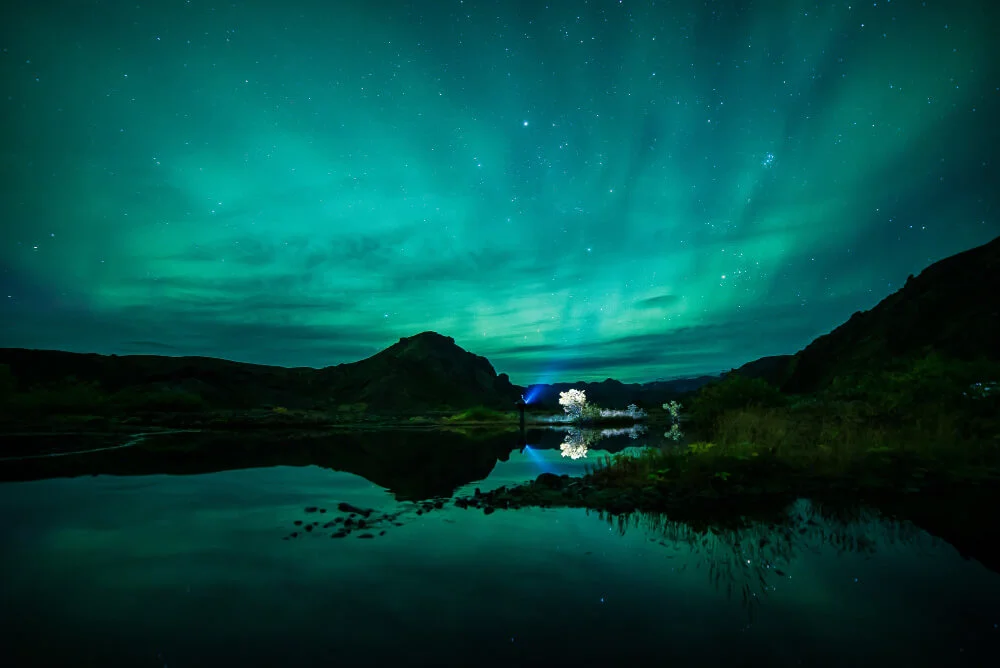
Auroras are natural displays of light that appear in the sky, mostly near the North and South Poles. In the Northern Hemisphere, they are called the Aurora Borealis or “Northern Lights.” In the Southern Hemisphere, they are called the Aurora Australis or “Southern Lights.”
These lights often appear as shimmering curtains, waves, or arcs of green, pink, purple, and even red. Sometimes they look like soft clouds, and other times like bright streaks dancing across the night sky.
Where Can Auroras Be Seen?
Auroras are most common in areas close to the Earth’s magnetic poles, such as:
- Norway, Sweden, Finland, and Iceland
- Alaska and Canada
- Antarctica and southern parts of New Zealand
People living near the equator rarely see auroras because the Earth’s magnetic field guides the particles toward the polar regions.
Why Do Auroras Happen?
The story of auroras begins with the Sun.
- Solar Wind:
The Sun constantly releases a stream of charged particles into space, known as the solar wind. - Earth’s Magnetic Field:
When these particles reach Earth, they are mostly blocked by our planet’s magnetic field. However, near the poles, the magnetic field is weaker, allowing some particles to enter. - Collision with Atmosphere:
As the solar particles travel down along the magnetic field lines, they collide with gases in Earth’s atmosphere (like oxygen and nitrogen). - Light Emission:
These collisions release energy in the form of light, which we see as glowing auroras.
Why Are Auroras Different Colors?
The color of an aurora depends on which gas the solar particles collide with and at what altitude:
- Green – The most common color, caused by oxygen about 100 km above Earth.
- Red – Caused by oxygen at very high altitudes (over 200 km).
- Blue or Purple – Caused by nitrogen molecules.
- Pink or Yellow – A mix of colors when different gases interact.
That’s why auroras often appear as multicolored ribbons across the sky.
Do Auroras Affect Humans or Technology?
While auroras are harmless to people watching them, the solar activity that causes them can affect technology:
- Satellites may face communication problems.
- Power grids can experience overload during strong solar storms.
- GPS systems may lose accuracy.
This is why scientists carefully monitor solar activity, especially during powerful solar storms.
Interesting Facts About Auroras
- The earliest recorded aurora sightings date back to ancient China and Greece.
- Auroras can move quickly, changing shape within seconds.
- Some auroras are faint, while others are so bright that people can read books under their glow.
- Jupiter and Saturn also have auroras, but they are caused by stronger magnetic fields and intense solar winds.
FAQs About Auroras
Q1: Can you see auroras without a telescope?
Yes. Auroras are visible to the naked eye, although cameras often capture brighter colors than human vision.
Q2: What time of year are auroras most visible?
In the Northern Hemisphere, they are best seen during winter months (September–March) when nights are longer and skies are darker.
Q3: How long do auroras last?
Some auroras last only a few minutes, while strong ones can continue for hours.
Q4: Are auroras dangerous?
No, auroras are not dangerous to humans directly. They are just light. The real concern is the solar storms that may disrupt satellites and electricity.
Q5: Can auroras be predicted?
Yes. Space weather forecasts track solar activity and predict the chances of seeing auroras in different regions.
Conclusion
Auroras are one of nature’s most stunning displays, created by the interaction between the Sun’s solar wind and Earth’s atmosphere. Their vibrant colors and mysterious movements make them a magical sight, especially in polar regions.
While they are beautiful to watch, auroras also remind us of the powerful forces at work between the Sun and our planet. Whether you dream of seeing the Northern Lights in Iceland or the Southern Lights in Antarctica, experiencing an aurora is truly unforgettable.