
How Breathing Works: Lungs and Oxygen Explained
Breathing is something we do every moment of our lives, often without even thinking about it. Yet, this simple act keeps us alive by supplying our body with the oxygen it needs and removing the carbon dioxide it produces. Understanding how breathing works not only helps us appreciate our bodies more but also explains why healthy lungs are so important for survival.
In this article, we will explore how breathing works, the role of the lungs, how oxygen enters the body, and why this process is vital for life.
What Is Breathing?
Breathing is the process of moving air in and out of the lungs. It consists of two main actions:
- Inhalation (inspiration): Bringing oxygen-rich air into the lungs.
- Exhalation (expiration): Pushing carbon dioxide-rich air out of the lungs.
Although it feels simple, breathing is controlled by a complex system involving muscles, nerves, and specialized organs that work together automatically.
The Importance of Oxygen
Oxygen is essential for life because it fuels the process of cellular respiration. Inside our cells, oxygen helps break down food molecules like glucose to release energy in the form of ATP (adenosine triphosphate). Without oxygen, cells cannot produce enough energy to function, and life would quickly stop.
At the same time, the process produces carbon dioxide as a waste product, which must be removed from the body. Breathing ensures both oxygen delivery and carbon dioxide removal.
How the Lungs Work
The lungs are the main organs of breathing. Located in the chest, they are soft, spongy organs protected by the ribcage. Each lung is divided into sections called lobes: the right lung has three lobes, while the left lung has two (to make room for the heart).
The lungs are connected to the outside world by a series of airways:
- Nose and mouth: Air enters the body and is warmed, moistened, and filtered.
- Trachea (windpipe): A tube that carries air down into the chest.
- Bronchi: Two main branches that lead into each lung.
- Bronchioles: Smaller airways that spread throughout the lungs.
- Alveoli: Tiny air sacs where oxygen and carbon dioxide are exchanged.
The Process of Inhalation
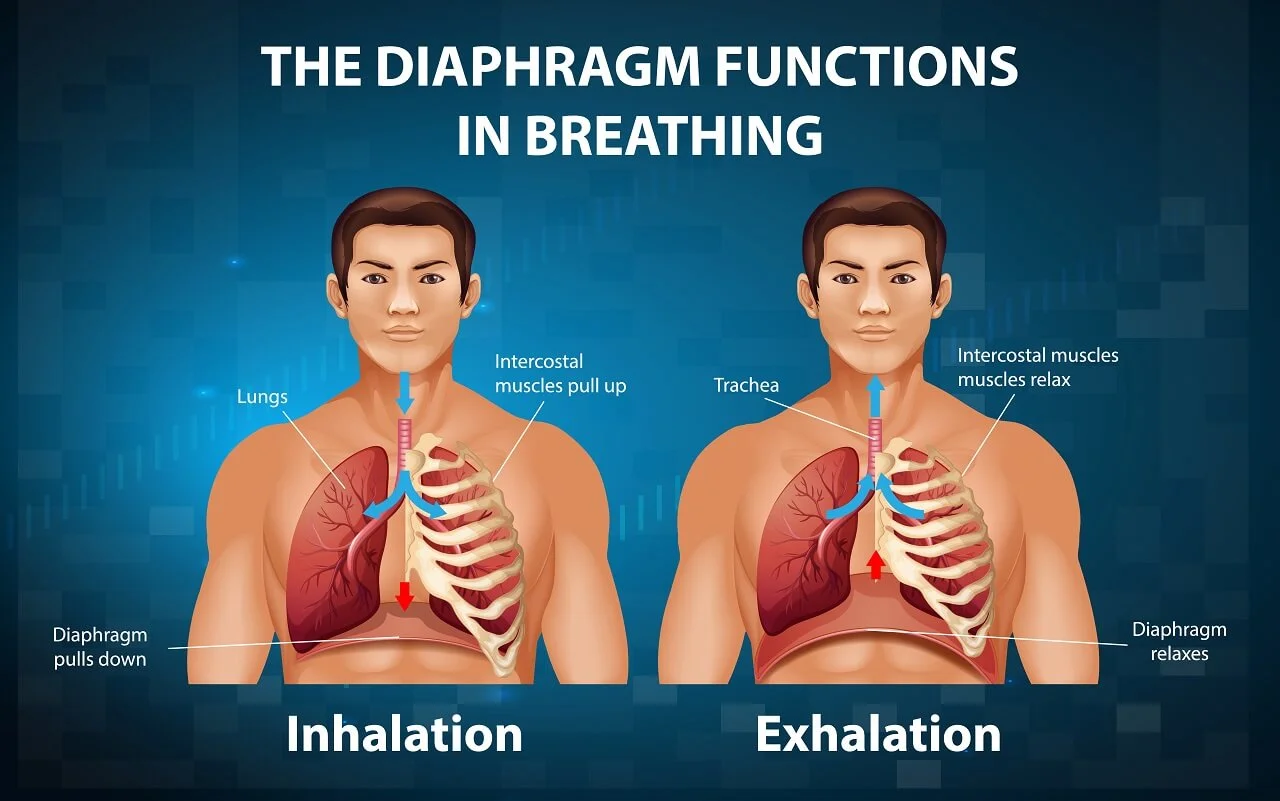
When you breathe in, your diaphragm (a dome-shaped muscle below the lungs) contracts and moves downward. At the same time, the muscles between your ribs expand your chest cavity. This creates negative pressure, pulling air into the lungs.
The fresh air passes through the trachea, bronchi, and bronchioles until it reaches the alveoli. These alveoli are surrounded by tiny blood vessels called capillaries.
Gas Exchange: Oxygen In, Carbon Dioxide Out
The alveoli are the most important part of breathing. They are tiny balloon-like structures that provide a large surface area for gas exchange.
Here’s what happens inside the alveoli:
- Oxygen from the air passes through the thin alveolar walls into the blood in the capillaries.
- Hemoglobin, a protein in red blood cells, binds with oxygen and carries it throughout the body.
- At the same time, carbon dioxide from the blood passes into the alveoli to be exhaled.
This exchange of gases is powered by diffusion—oxygen naturally moves from an area of high concentration (inside the alveoli) to low concentration (in the blood), while carbon dioxide moves in the opposite direction.
The Process of Exhalation
After the gas exchange, the diaphragm and rib muscles relax. The chest cavity becomes smaller, and air is pushed out of the lungs. This exhaled air contains less oxygen but more carbon dioxide.
Exhalation is usually passive (requiring little effort), but during exercise or illness, extra muscles help push the air out more forcefully.
How Breathing Is Controlled
You don’t need to think about every breath you take because the brainstem automatically controls it. Special sensors in your brain and blood vessels monitor the levels of oxygen and carbon dioxide.
- If carbon dioxide levels rise too high, your breathing rate increases.
- If oxygen levels drop, your body signals you to breathe faster and deeper.
This automatic control ensures your body always has enough oxygen, even while you sleep.
Breathing During Exercise
When you exercise, your muscles use more oxygen and produce more carbon dioxide. To meet this demand, your breathing rate and depth increase. This allows more oxygen to enter your blood and more carbon dioxide to be removed.
Athletes often train their lungs and respiratory muscles to work more efficiently, which improves performance and endurance.
Common Breathing Problems
Healthy lungs are vital for life, but many conditions can interfere with breathing:
- Asthma: Airways become inflamed and narrow, making it hard to breathe.
- Chronic Obstructive Pulmonary Disease (COPD): Long-term damage to the lungs, often caused by smoking.
- Pneumonia: Infection that fills the alveoli with fluid.
- Lung cancer: Uncontrolled growth of abnormal cells in the lungs.
- COVID-19: A viral infection that can damage the lungs and reduce oxygen exchange.
Understanding how breathing works can help us recognize the importance of protecting our lungs through healthy lifestyle choices.
How to Keep Your Lungs Healthy
Since breathing is essential for life, protecting your lungs is critical. Here are some simple tips:
- Avoid smoking and exposure to secondhand smoke.
- Exercise regularly to strengthen your lungs and diaphragm.
- Avoid pollutants by wearing masks in polluted areas.
- Practice deep breathing to increase lung capacity.
- Eat a healthy diet rich in antioxidants to support lung health.
- Stay hydrated to keep mucus in the lungs thin and easy to clear.
Why Breathing Matters Beyond Oxygen
Breathing doesn’t just provide oxygen—it also connects us to the environment. Every breath you take contains molecules that have traveled across the world. Breathing also helps regulate the body’s acid-base balance and even plays a role in speaking, singing, and expressing emotions.
Conclusion
Breathing may seem simple, but it is one of the most important processes keeping us alive. The lungs bring oxygen into the body, remove carbon dioxide, and fuel every cell. From the contraction of the diaphragm to the microscopic exchange in the alveoli, every breath is a marvel of biology.
By understanding how breathing works, we can appreciate our bodies more and take steps to protect our lungs for a healthier, longer life.